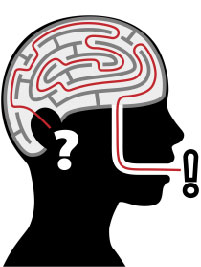
The Creator of the human species made people with great minds that are capable of reasoning. The ability to analyze our surroundings is crucial to maintaining a high self-esteem. We live in a world where we are bombarded with fast moving images and messages that we must accurately interpret. While cruising the information highway, we must possess a strong desire to know more about the source of the information we feed upon. Our mental survival depends on us practicing digital literacy.
Participation in WebQuest discovery will activate higher order thinking skills, as well as spark emotions. Instead of surfing the internet for emotional thrills, conduct a webquest. WebQuests use the technique of inquiry to engage web surfers in active learning.
The goal of a WebQuest is to use more of your reasoning abilities to analyze information at websites. When surfing the world wide web, engage your mind as well as your emotions. Ask yourself open-ended questions about the websites you visit. Open ended questions begin with: who, what, when, where, how, why. Answering your own questions honestly and objectively will help keep you safe from virtual predators while enjoying your time on the internet.
Thinking vs Emotion
Although it can offer entertainment, the internet is not a place for unbridled fun. It is a global marketplace. Creators of content want something from their viewers. Your job is to find out what they want from you. One must use a cool head and not zone out while driving on the global highway. This requires keeping your emotions in the back seat and allowing your analytical brain to take the wheel. LtL Book Club courses use WebQuests to help students learn to quickly analyze digital material.
The LtL Study Guides utilize WebQuest techniques. Original source documents are linked for fact checking. Multimedia stimulates mental activity. Quizzes aid in memory recall.
Click the Links
Some WebQuests will be clickable links within the course content. Clicking the link will jump you to supporting evidence on websites vetted by LtL Study Guides. The active links tend to be in color. Your mouse will also turn into the pointing finger when you are at a link. So wave your mouse over the hyperlinked resources. Each time you click, you explore the original source of the information. Exploring the topic further will deepen your understanding.
The embedded links will sometimes take you to online newspapers and news stations from around the globe, where you will be exposed to international thoughts and ideas from many corners of the world. This exposure will allow you to weigh their viewpoints against your own, thereby helping you balance your perspective. You are encouraged to be a literate and savvy consumer of information.
However, it’s up to you.
Take as much or as little of the material that works for your comfort level.
Social Media Enhancement
To enhance the learning experience, LtL Study Guides choose expert content available from social media sharing. The creators of YouTube videos generously share their knowledge and expertise. They encourage linking to their information so that more people will benefit from their wisdom.
If you visit their website, give them a social media “LIKE”. Sometimes videos that were public become private. This will result in a broken link. Please report any broken or non-working links to :
Creating new habits means that our brains carve out new neural pathways to develop the behavior. The nervous system controls our bodies by communicating through these neural pathways. Based on your goals, desires, and habits, the brain tries to modify these new pathways until they become part of your brain.
Neuroplasticity is the ability of the human brain to adapt.
This happens on a daily basis and needs encouragement and stimulation.
If we agree that creating positive habits is good, what can we do to improve our social media and internet behaviors?
hint: SEE BELOW
Tips For Developing Positive Social Media habits
You can rewire your brain to establish better social media habits. All you have to do is find activities outside of the internet to engage your mind. Adopt a few of the suggestions below, and it will inspire you to surf the internet seeking virtual groups that will promote better health and success.
Read a novel. Novels help us develop empathy. We are able to put ourselves in other’s shoes.
Get enough quality sleep. Your brain needs sleep to reset brain connections that are important for memory and learning.
Find a strong purpose to learn a new hobby.
Exercise
Reduce stress.
Building positive relationships outside the world wide web will affirm your human-ness and improve your overall well-being.